
Turn Customer Reviews Into an AI Messaging Guide
Use real customer language to build a reusable messaging guide for emails, sales pages, FAQs, and social posts.
Watch the overview
3 minPrefer to read? The complete article and copyable prompts are directly below.
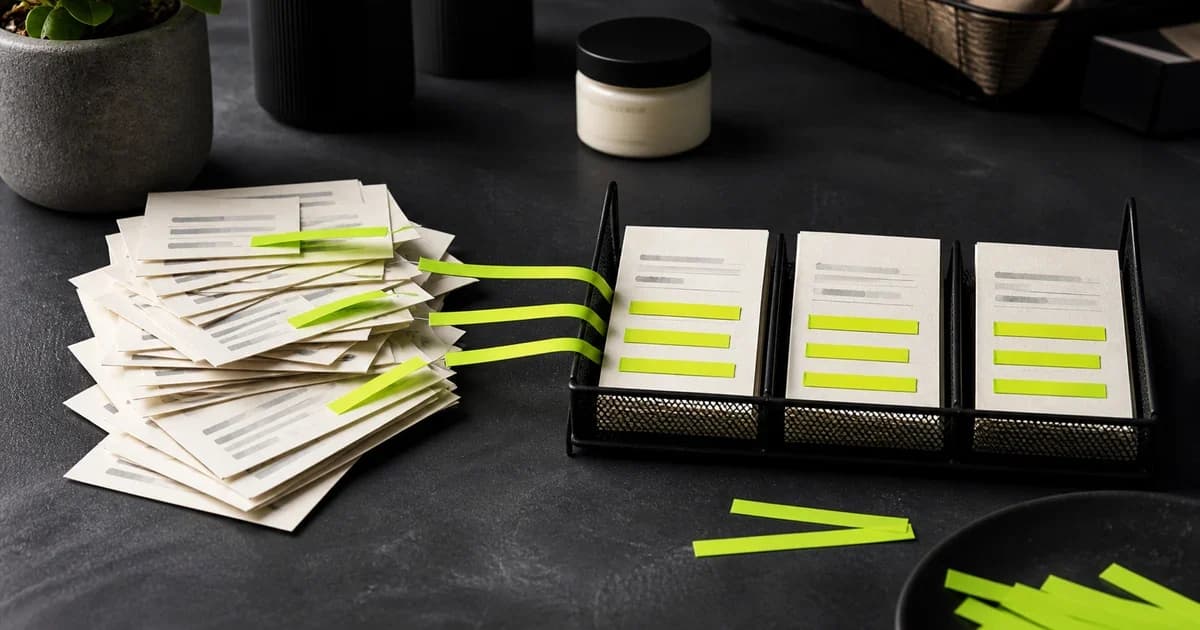
Your customers already describe what they value, what worried them before buying, and what finally made the purchase feel worthwhile. Those phrases are more useful than generic marketing language because they came from real experience.
In this tutorial, you will use AI to organize public customer reviews into a one-page messaging guide. The AI is a pattern-finding assistant here—not a source of new testimonials, claims, or customer facts.
What you will create
A reusable guide with five sections:
- The problems customers describe
- The outcomes they value
- The words and phrases they naturally use
- The objections or concerns that appear repeatedly
- Approved proof points your business can support
You can use the finished guide when drafting an email, sales page, FAQ, ad concept, or social post. Pair it with your one-page AI business brief so the AI has both verified business context and real customer language.
What you need
Gather these before you begin:
- 10 to 20 recent public reviews of your business or product
- The original review links or platform names for verification
- A blank document or spreadsheet
- Your current offer and any approved proof points
- About 30 minutes
Use reviews your business is allowed to access. Do not copy private support conversations, medical details, payment information, addresses, or other personal data into an AI tool.
Step 1: Build a clean review set
Copy each review into your document. Give it a simple source label such as Review 01 and save the original link separately. Remove reviewer names, profile photos, order numbers, locations, and any detail that could identify a person.
Keep criticism in the set. A useful messaging guide should capture concerns and friction, not just compliments. Do not correct the customer’s wording yet.
Use this structure:
## Review 01
Source link: [SAVE OUTSIDE THE AI PROMPT]
Review text: [ANONYMIZED REVIEW]

## Review 02
Source link: [SAVE OUTSIDE THE AI PROMPT]
Review text: [ANONYMIZED REVIEW]
Step 2: Ask AI to extract evidence, not write copy
Paste only the anonymized review text into your AI tool with this prompt:
You are analyzing a set of customer reviews for patterns.

Use only the review text below. Do not invent customer details, claims, percentages, quotes, or conclusions.

Create a table with these columns:
1. Theme
2. Exact customer phrase
3. Review number
4. Problem described
5. Outcome described
6. Concern or objection

Include a theme only when the review text supports it. Keep exact phrases in quotation marks and preserve the customer’s original wording. If a field is not supported, write "Not stated."

REVIEWS:
[PASTE ANONYMIZED REVIEWS]
Check several extracted phrases against the originals before moving on. If the wording changed, correct it or rerun the prompt with a stricter instruction to quote exactly.
Step 3: Separate patterns from one-off comments
Now ask the AI to group the evidence without pretending that a small review set represents every customer.
Using only the evidence table above, group similar entries into themes.

For each theme, provide:
- A plain-language theme name
- The review numbers that support it
- Up to three exact customer phrases
- Whether it appears once or in multiple reviews
- Any contradiction or important exception

Do not calculate percentages. Do not call a theme common, typical, or universal unless the supplied evidence supports that wording.
A comment that appears once can still inspire a question to investigate, but it should not become a broad marketing claim.
Step 4: Build the one-page messaging guide
Select the verified themes that are relevant to your current offer. Then use this prompt:
Turn the verified review evidence below into a concise messaging guide.

Create these sections:
1. Customer problems—in plain language
2. Desired outcomes—without guarantees
3. Voice-of-customer phrase bank—exact quotes with review numbers
4. Questions or objections to answer
5. Possible proof points that require business approval
6. Words or claims to avoid because the reviews do not support them

Rules:
- Use only the supplied evidence
- Do not invent statistics, testimonials, guarantees, or customer identities
- Keep exact quotes unchanged
- Label anything needing owner confirmation
- Keep the final guide to one page

VERIFIED EVIDENCE:
[PASTE YOUR CHECKED THEMES AND PHRASES]
The phrase bank should sound like customers, not like polished advertising. That is the value.
Step 5: Test the guide on one real asset
Choose one low-risk customer-facing task, such as an FAQ answer or follow-up email. Use the guide with a specific prompt. If you want a refresher on prompt structure, use the three-part prompt formula.
You are a clear, helpful small-business copywriter.

Draft one FAQ answer for this customer question: [QUESTION]

Use the messaging guide below for language and approved evidence. Keep the answer under 120 words. Do not create a guarantee, discount, deadline, statistic, or testimonial. If a necessary fact is missing, mark it in brackets for owner review.

MESSAGING GUIDE:
[PASTE GUIDE]
Compare the draft with the original reviews and your current offer. The goal is not to paste customer quotes everywhere. It is to make your wording clearer, more specific, and grounded in what customers actually said.
Review checks
Before your team reuses the guide, confirm that:
- Every direct phrase matches its source review
- No reviewer can be identified from the working document
- A single comment has not been presented as a universal pattern
- Every product, service, price, and policy is current
- Claims about results can be supported independently
- Negative feedback and exceptions were not removed just to make the story cleaner
- Quotes are used in line with the review platform’s terms and your local rules
Privacy and trust guardrails
Public does not always mean appropriate to reuse in an advertisement. Keep source links in your private verification file, remove personal details before using AI, and get permission when your planned use requires it. Never create a composite testimonial that could be mistaken for one real person’s statement.
If reviews mention health, legal, financial, employment, children, or other sensitive circumstances, leave those details out of the AI workflow unless your organisation has an approved process.
Your next action
Choose 10 recent public reviews, anonymize them, and run the evidence-extraction prompt today. Do not draft marketing copy until you have checked the extracted phrases against the originals.