
Turn a Messy Process Into a One-Page SOP
Convert rough notes, recordings, and expert knowledge into a usable standard operating procedure with decisions and exceptions.
Watch the overview
4 minPrefer to read? The complete article and copyable prompts are directly below.
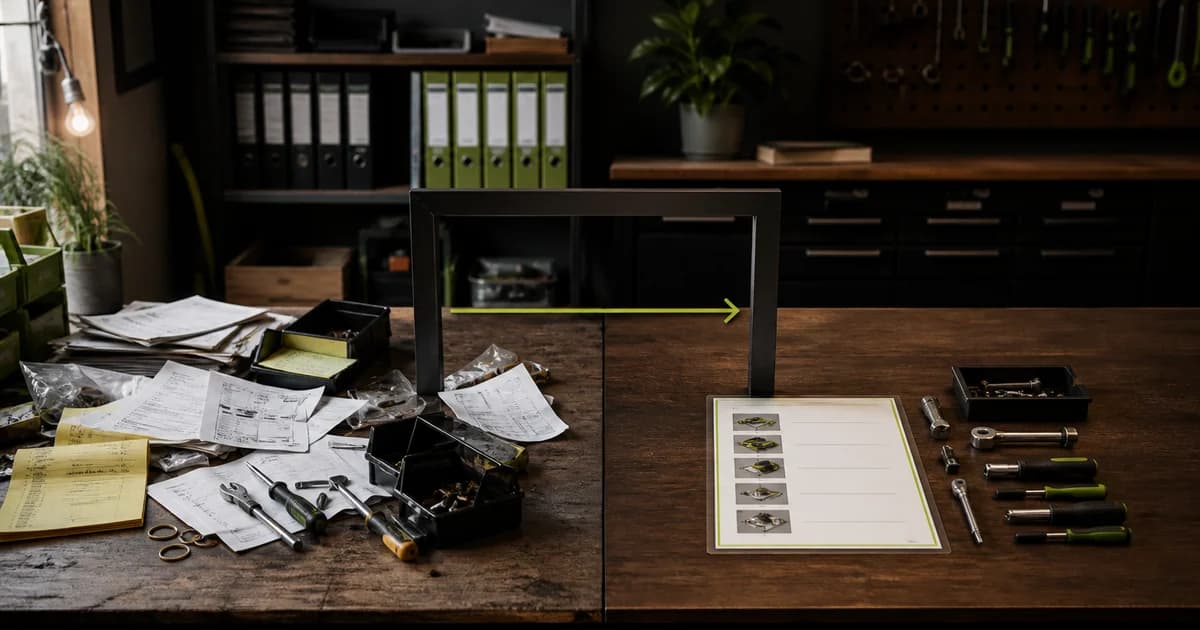
If a process only works when one person remembers every step, it is not yet a reliable process. A one-page SOP can capture the decisions and exceptions that a simple checklist misses.
This guide helps you create a one-page sop with trigger, owner, inputs, steps, decisions, exceptions, quality check, and escalation path.
What you need
- A real example of the process being completed
- Notes, transcript, screenshots, or a walkthrough from the person who does it
- Known tools, approvals, exceptions, and quality standards
The workflow
1. Capture the process as performed
Ask the operator to explain what they actually do, including workarounds and judgment calls. Do not start from the ideal process.
2. Mark decisions and exceptions
Most failed SOPs document clicks but omit what to do when information is missing, a result looks wrong, or approval is delayed.
3. Compress around the outcome
Keep the main path on one page and link detailed references separately. The SOP should help someone complete the job, not document every possible fact.
4. Test with a second person
The author knows too much to see missing context. Have another person use the SOP and record every point of hesitation.
Copy this working prompt
Replace every bracketed field with verified information from your business. If you do not know something, write unknown instead of guessing.
Turn this real process evidence into a one-page standard operating procedure.

Process name and desired outcome:
[DESCRIBE]

Trigger and frequency:
[DESCRIBE WHEN IT STARTS]

Owner and approvers:
[LIST ROLES]

Tools and inputs:
[LIST]

Raw walkthrough, notes, or transcript:
[PASTE REDACTED SOURCE]

Known exceptions, risks, and quality standards:
[LIST]

Create:
1. Purpose and successful outcome
2. Trigger
3. Owner, approver, and backup
4. Required inputs and access
5. Numbered main-path steps
6. Decision points in if-then form
7. Common exceptions and escalation
8. Final quality checklist
9. Evidence to save
10. Review date and process owner

Flag missing information [CONFIRM]. Do not invent system behavior, permissions, policies, people, timing, or exceptions.
Run a second-pass review
The first output should not be the final answer. Use this challenge prompt to find weak evidence, hidden assumptions, or avoidable risk.
Act as a new employee using this SOP for the first time. List every missing input, unexplained term, hidden decision, unclear owner, and step that cannot be verified.What good looks like
- A new person can find the starting point
- Judgment calls are visible
- The quality check proves completion
Review before you use it
- Was the SOP tested by someone other than the author?
- Are credentials referenced but never included?
- Is there an owner and review date?
Privacy and judgment guardrails
- Remove passwords, payment details, private health information, and confidential customer data before pasting anything into an AI tool.
- Treat the output as a working draft. A person remains responsible for the decision, promise, price, and final send.
- Do not let AI invent customer quotes, financial figures, legal terms, capabilities, deadlines, or proof.
Your next action
Have a second person complete the process using only the SOP while the expert observes silently.
If your AI tool still lacks the context to do this well, first Start with everyday operational tasks.