
Convert Meeting Notes Into Decisions, Owners, and Deadlines
Turn rough notes into a decision record and action plan without letting AI assign commitments people never made.
Watch the overview
3 minPrefer to read? The complete article and copyable prompts are directly below.
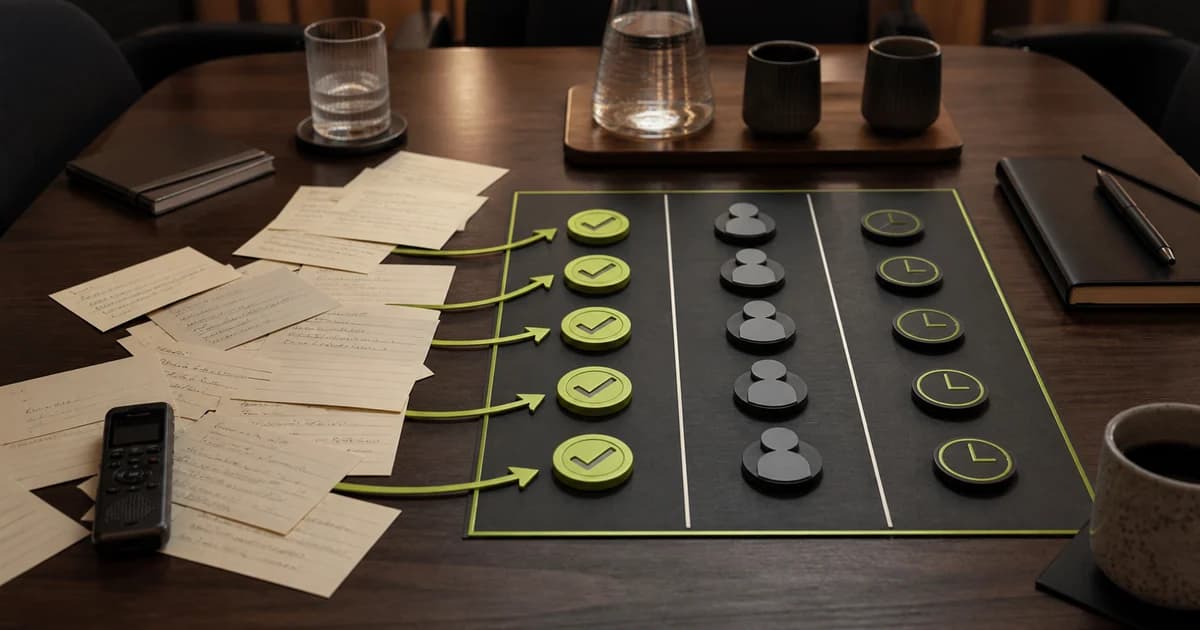
A meeting is not productive because it generated three pages of notes. It becomes useful when decisions, owners, deadlines, and unresolved questions are clear afterward.
This guide helps you create a clean meeting record with decisions, open questions, actions, owners, due dates, risks, and a concise follow-up message.
What you need
- Meeting notes or a consented transcript
- Participant names or roles
- Any decisions and commitments confirmed during the meeting
The workflow
1. Use consented source material
Make sure participants know how notes or transcripts are captured and stored. Redact sensitive information before using external tools.
2. Separate discussion from decision
Ideas, preferences, and possibilities are not decisions. Require exact evidence for anything marked decided.
3. Never invent an owner or deadline
If the source does not name a person or date, label it unassigned or not set and make it an open question.
4. Send the record quickly
A short confirmation soon after the meeting lets people correct misunderstandings before work begins.
Copy this working prompt
Replace every bracketed field with verified information from your business. If you do not know something, write unknown instead of guessing.
Turn these meeting notes into an accurate decision and action record.

Meeting purpose:
[DESCRIBE]

Participants and roles:
[LIST]

Raw notes or consented transcript:
[PASTE REDACTED SOURCE]

Rules:
- A decision must have explicit support in the source
- An action must preserve the stated owner and deadline
- If owner or date is missing, write Unassigned or Not set
- Do not turn suggestions into commitments

Return:
1. Three-sentence meeting summary
2. Decisions made with source evidence
3. Actions with owner, deadline, dependency, and success condition
4. Open questions
5. Risks and blockers mentioned
6. Items discussed but not decided
7. Conflicts or ambiguities to confirm
8. A short follow-up message asking participants to correct the record

Do not invent agreement, owners, dates, priorities, or intent.
Run a second-pass review
The first output should not be the final answer. Use this challenge prompt to find weak evidence, hidden assumptions, or avoidable risk.
Compare every decision and action against the raw notes. Quote the supporting source. Downgrade anything without explicit evidence to discussion or open question.What good looks like
- Decisions are distinct from discussion
- Unknown owners remain unassigned
- Participants can correct the record
Review before you use it
- Was transcript use consented?
- Does every action have source evidence?
- Were sensitive notes removed before sharing?
Privacy and judgment guardrails
- Remove passwords, payment details, private health information, and confidential customer data before pasting anything into an AI tool.
- Treat the output as a working draft. A person remains responsible for the decision, promise, price, and final send.
- Do not let AI invent customer quotes, financial figures, legal terms, capabilities, deadlines, or proof.
Your next action
Send the draft record to participants with a specific deadline for corrections before treating it as final.
If your AI tool still lacks the context to do this well, first Use AI for low-risk admin work.